DStv Signal Problems in Hout Bay: Salt, Wind and 6 Fixes
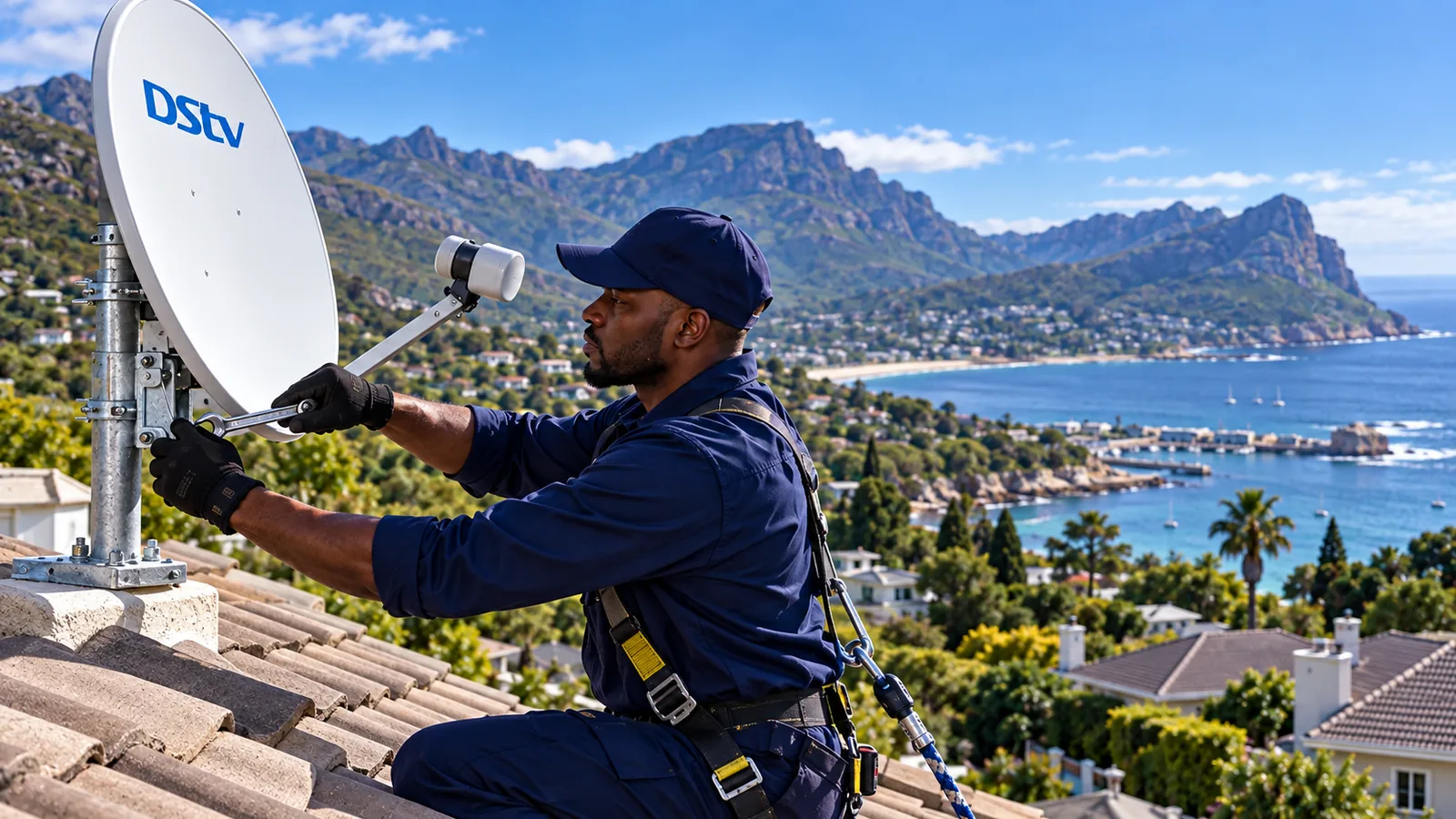
A north-wester rolls in over the Sentinel, the rain hits the windows sideways, and the TV goes black halfway through the news. Sound familiar? DStv signal problems in Hout Bay have a few very local causes: salt, wind and the mountains that make this valley so beautiful. The good news is that most of them can be found and fixed.
Quick answer
Most DStv signal problems in Hout Bay come from four things: rain fade during storms, wind shifting the dish, salt corroding the LNB and connectors, and mountain shadow cutting the signal margin. Wait out heavy rain first. If the signal stays poor on clear days, the dish needs realigning or the LNB and cabling need repair.
Below we look at the three coastal culprits, how to read your signal screen, and six fixes from simple checks to a full realignment.
Why Hout Bay has its own DStv signal problems
DStv reaches South Africa from the Intelsat 20 satellite at 68.5 degrees East. From the Western Cape, a dish must look north-east and fairly high. Anything in that line weakens the signal before it arrives.
Hout Bay is ringed by high ground. Chapman's Peak, the Karbonkelberg and the slopes above Hughenden all cast "signal shadow" over some properties. Add a salty sea breeze and strong gusts, and you have the three causes we deal with most.
We are DStv installation technicians in Hout Bay, so we see the same patterns every winter. Most DStv signal problems we visit are not mysterious at all. They follow the weather, the slope of the house and how long ago anyone looked at the dish.
| Coastal cause | What you notice | Most likely areas |
|---|---|---|
| Salt corrosion | Slowly worsening quality, then E48-32 errors | Northshore, Scott Estate, near the beach and harbour |
| Wind shift | Signal fine one day, gone after a gusty night | Exposed slopes in Hughenden and Penzance Estate |
| Mountain shadow | Weak margin, drops in any light rain | Homes tucked under the Karbonkelberg or toward Llandudno |
| Rain fade | Short drop-outs during heavy downpours | Everywhere, worse where margin is low |
Reading DStv signal problems on your screen: strength vs quality
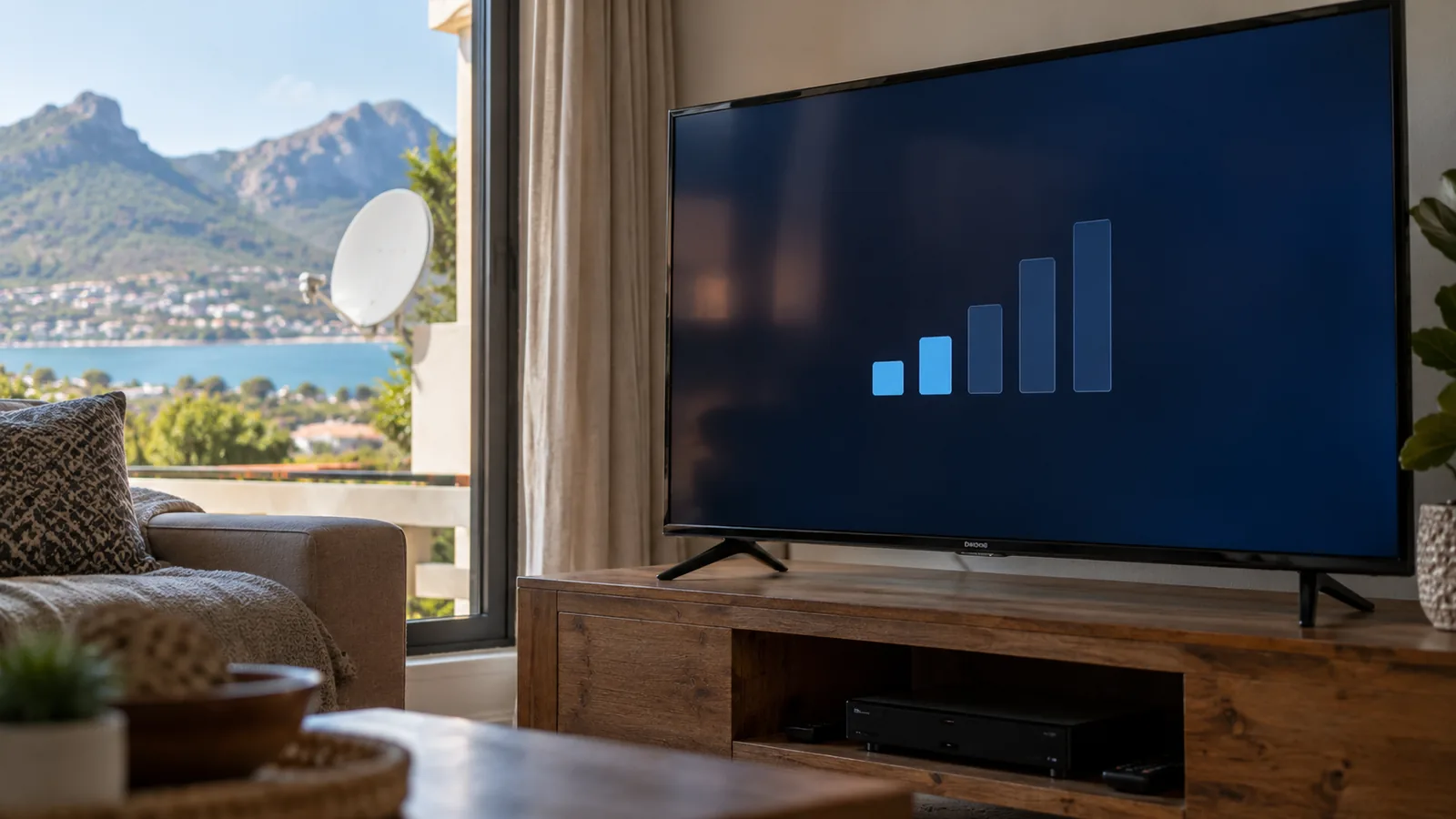
Your decoder has a signal screen in its settings menu. On most models you find it under settings, then signal or installation. It usually shows two bars.
- Signal strength shows how much signal arrives at the decoder.
- Signal quality shows how clean and usable that signal is.
Quality matters more. A high strength with low quality usually means interference, a bad connector or a slightly misaligned dish. Write down both readings on a clear day, so you have something to compare against when DStv signal problems start. DStv's own help pages on dstv.com also list error meanings if you want to double-check a code.
Good to know
On the same menu you may see manual settings for the LNB type and frequencies. Only change these if you know what was set before. A wrong LNB setting, for example after fitting a Smart LNB, can look exactly like a dish fault.
Cause 1: salt and the DStv LNB in Hout Bay
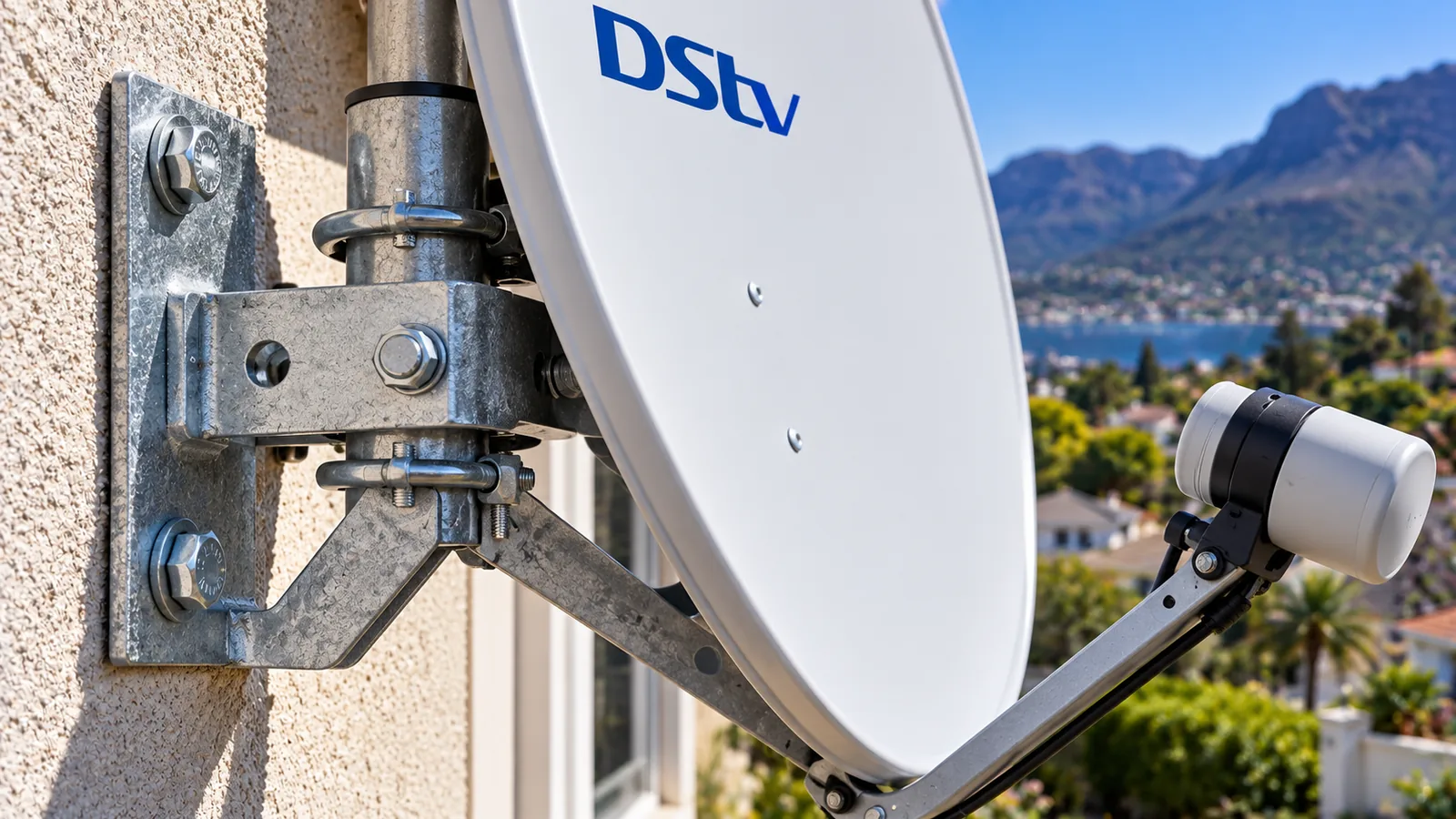
The LNB at the end of the dish arm is the part most exposed to sea air. Salt works into the F-connector, then into the cable. Signal quality drops slowly over months until one damp morning you get DStv no signal on every channel.
Explora owners should pay special attention, because a Smart LNB fault can also cause recording and tuner errors. Our article on the Smart LNB in salty coastal air explains when to replace it and when a new connector is enough.
Technician tip
Look at the dish from the garden with binoculars or a phone zoom. A white or green crust where the cable joins the DStv LNB is a strong hint that salt is the culprit, and it saves guessing.
Cause 2: wind and dish drift in Hout Bay
A dish only needs to move a tiny amount to lose the satellite. Strong gusts off the Atlantic, especially in winter storms and summer south-easters, test every bolt. Brackets fixed into soft plaster or rotten timber loosen bit by bit.
Signs of drift are easy to spot. The signal was fine until a windy night, the dish looks slightly tilted, or quality is lower than your clear-day note. Fixing it means a proper realignment with a meter and tightened mounts, not just a nudge.
Holiday homes in Llandudno and Penzance Estate suffer most here. Nobody is around to notice the dish slowly moving over winter, so the first guest of summer finds the TV dead. A quick pre-season check avoids that call. If the house stands empty for months, our post on what to check before calling about no signal is a handy list for caretakers.
Need DStv installers in Hout Bay?
Tell us what you need or what your screen is showing. We give you a clear price before we drive out.
Cause 3: DStv signal problems from mountain shadow and weather
Some homes have a narrow window to the satellite. In Hout Bay, that window can be partly blocked by a ridge, tall trees or a new double-storey next door. Those homes run with little spare signal, so even light rain tips them over.
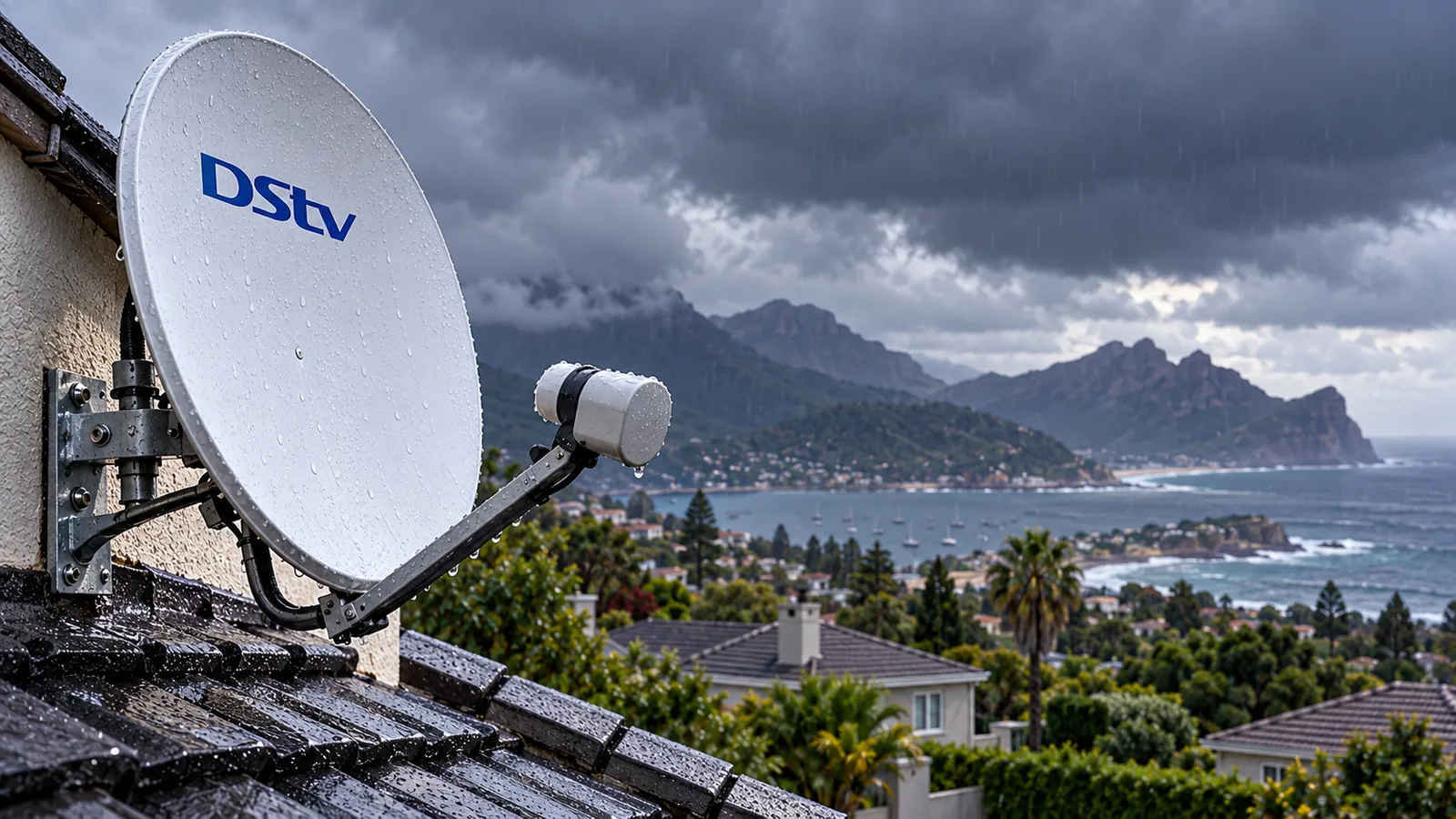
Heavy rain causes what technicians call rain fade, a temporary loss while the storm passes. A well-aligned dish with good margin rides it out far better. Our older post on why weather knocks out DStv in Hout Bay goes deeper into storms and cloud.
DStv no signal error codes to know
- E48-32: no signal reaching the decoder at all. Think dish, LNB, cable or obstruction.
- E30-2: temporary signal loss, usually bad weather. Wait it out.
- Other codes: E16, E51 and E141 relate to the account or smartcard, not the dish.
Sometimes what looks like a signal fault is a frozen decoder or a remote that has stopped responding. Our guide for when the DStv remote control is not working helps you rule that out quickly.
6 fixes for DStv signal problems in Hout Bay
Work through these in order. The first three are safe for anyone. The last three need a technician.
- Wait out the storm. If it is pouring and the code is E30-2, give it an hour before doing anything.
- Restart and check cables. Switch the decoder off at the wall for a minute. Make sure the cable at the back is screwed on firmly and not kinked.
- Check the signal screen. Compare strength and quality with your clear-day note. Low quality on a dry day points to a fault outside.
- Replace corroded connectors. A technician cuts back to clean cable and fits sealed connectors.
- Replace the LNB. If the LNB itself is cracked or worn out, a new one restores the margin.
- Realign and re-secure the dish. Fine alignment on a meter, new bolts and a stronger bracket if needed.
Fixes 4 to 6 are where a proper dish alignment service in Hout Bay or a DStv signal repair visit comes in. We test at the dish and at the TV, so the fault is found, not guessed.
Safety first
Do not climb onto a wet or windy roof to move a dish. Many Hout Bay homes sit on steep plots with long drops, and tiles get slippery fast. Leave fixes 4 to 6 to someone with the right ladder, harness and meter.
Can a phone app find DStv signal problems?
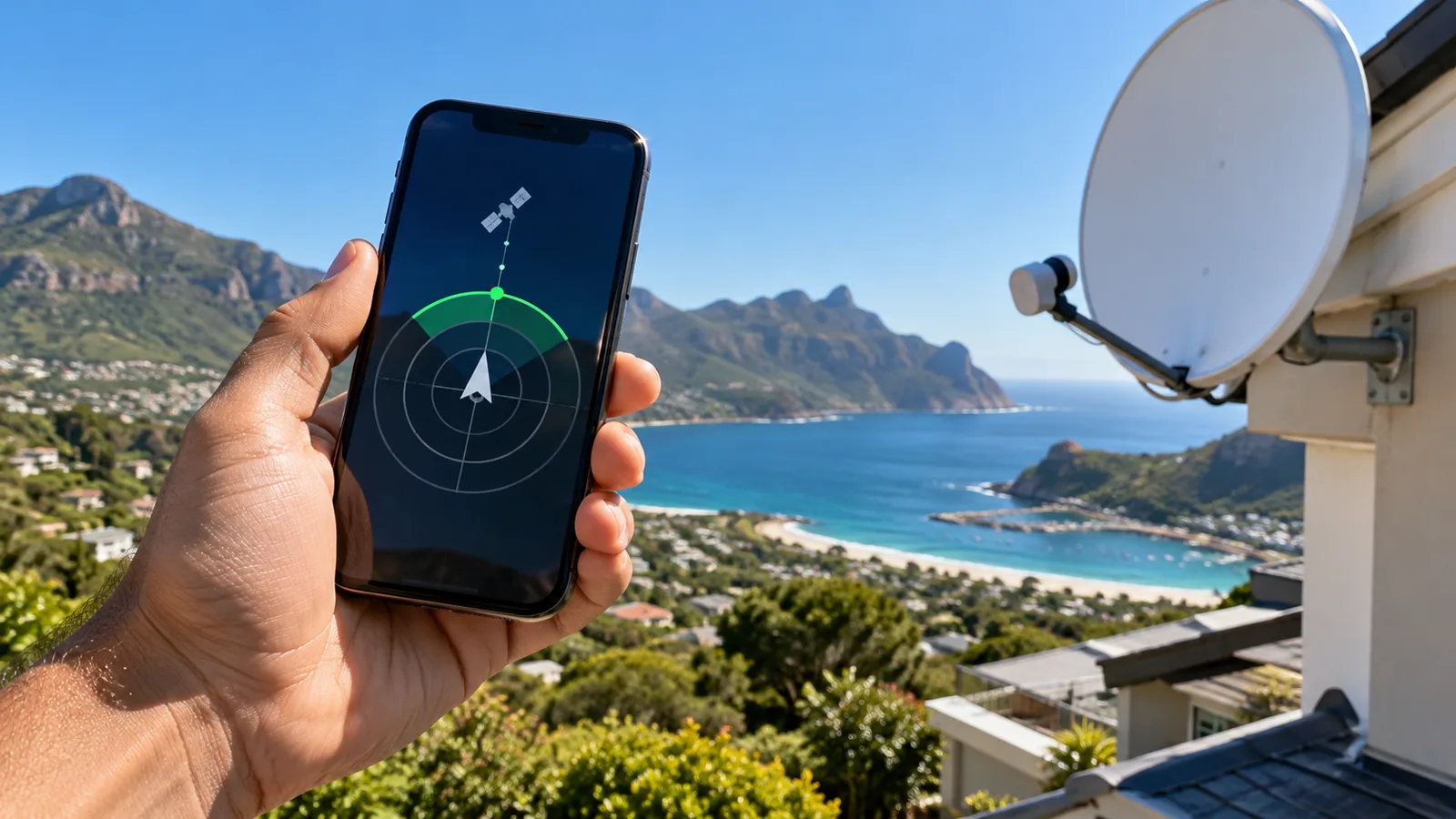
Satellite finder apps use your phone's compass and GPS to show roughly where Intelsat 20 sits in your sky. They are useful for checking whether a tree, a roof or a ridge is in the way.
They are not accurate enough to align a dish, and they cannot fix DStv signal problems on their own. Fine alignment needs a proper signal meter, which reads the actual signal at the LNB. Use the app to look, and leave the aiming to a meter.
DStv signal repair in Hout Bay: what it costs and what we check
Every home is different, so we quote first. A DStv signal repair in Hout Bay usually covers:
- Signal reading at the decoder and at the dish
- Inspection of connectors, cable and the DStv LNB
- Tightening or replacing brackets and bolts
- Fine alignment for best quality, not just strength
- A test on several channels with you before we leave
If the dish is old or badly placed, a new spot may be the real fix. Our guide to choosing DStv installers near you in Hout Bay explains what a fair quote includes. Thinking of a free-to-air backup? OpenView uses the same satellite position, so we can often reuse the dish, as we explain in our post on OpenView activation and adding channels.
Book a DStv signal check in Hout Bay
Our team is local, and we work in Llandudno, Hangberg, Imizamo Yethu and across the valley. If your DStv signal problems keep coming back after storms, get in touch with our Hout Bay team for a quote, often for a visit the same or next day, depending on the schedule.
DStv signal problems in Hout Bay: FAQs
Why does my DStv keep losing signal in Hout Bay?
In Hout Bay the usual causes are rain fade in storms, wind shifting the dish, salt corroding the LNB and connectors, and mountain shadow reducing signal margin. If the signal only drops in heavy rain, wait it out. If it stays poor on dry, calm days, the dish or LNB needs a technician.
How do I fix DStv signal problems myself?
Start with the safe checks. Wait for heavy rain to pass, restart the decoder at the wall and make sure the cable at the back is screwed in firmly. Then check signal quality in the settings menu. If quality is low on a clear day, the fault is outside and needs a technician with a meter.
What does DStv no signal E48-32 mean?
E48-32 means no signal is reaching the decoder. Common causes are a dish knocked out of line, a faulty LNB, a corroded connector, a damaged cable or something blocking the view to the satellite. Heavy rain can also cause it briefly. If it lasts on clear days, book a signal check.
Are DStv signal problems today a DStv outage or my dish?
Check whether neighbours or DStv social channels report an outage. If only your home is affected, and especially if the problem started after a storm or windy night, the cause is most likely your dish, LNB or cabling. Compare your signal quality reading with a clear-day reading to be sure.
How much does DStv signal repair cost in Hout Bay?
It depends on the fault. A connector replacement and realignment costs less than a new LNB or bracket, and a full move of the dish costs more. We inspect, explain the fault and quote before we start any work. There are no surprise extras on the invoice.
Can a phone app fix DStv signal problems?
A satellite finder app shows roughly where the satellite sits, which helps spot trees or roofs in the way. It cannot fine-tune a dish. Proper alignment needs a signal meter reading at the LNB. Use the app to look, then let a technician align the dish.
Talk to our Hout Bay team
Call or WhatsApp us for a quote. We answer quickly and we always price the job before we arrive.